Description
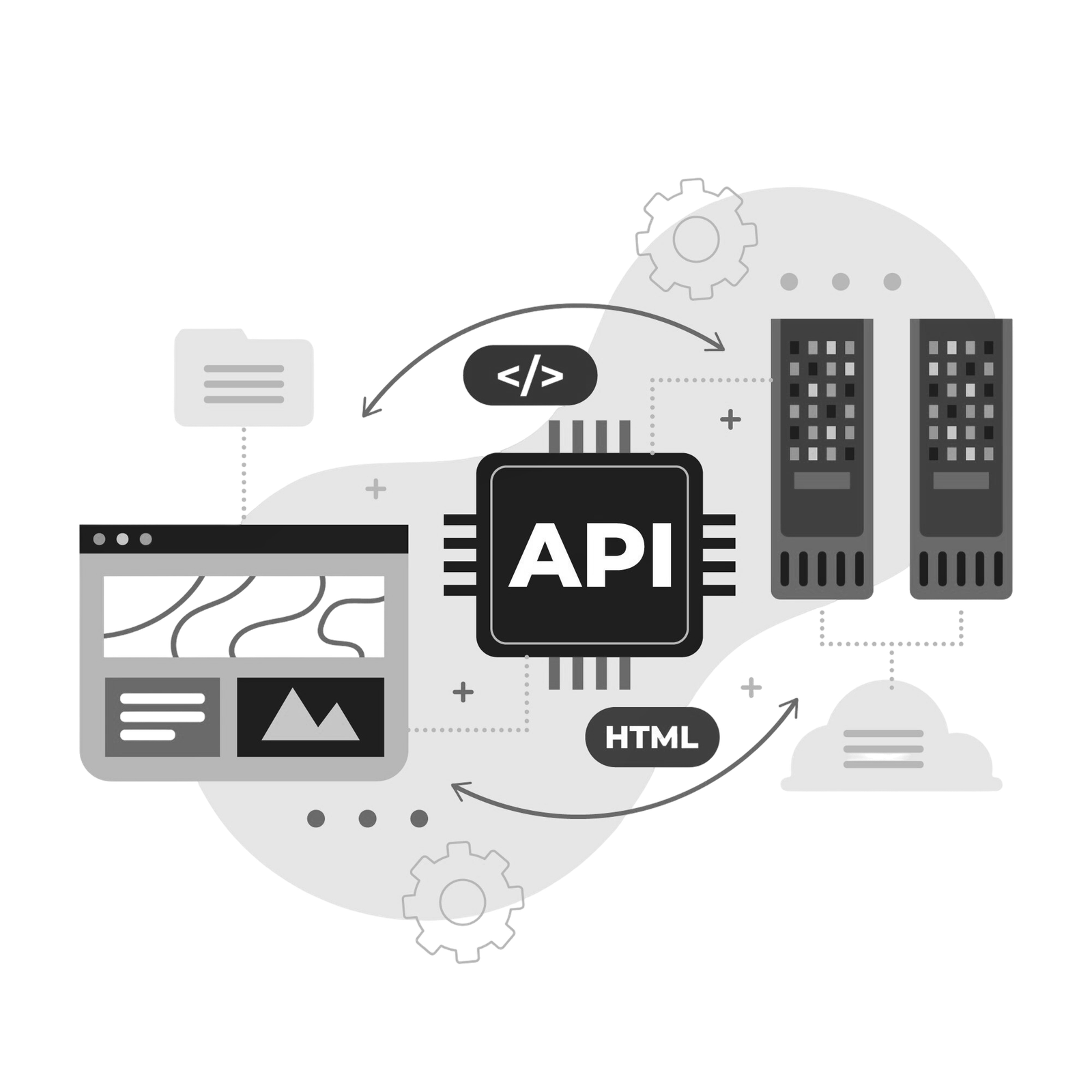
API Development is the cornerstone of modern digital ecosystems, enabling seamless communication between disparate applications, services, and devices. Our custom API development service is designed to build robust, scalable, and secure application programming interfaces that serve as the connective tissue of your digital infrastructure. Whether you need a public-facing RESTful API for third-party developers, a high-performance GraphQL endpoint for your mobile and web frontends, or an internal microservices mesh for enterprise systems integration — we engineer APIs that are not only functional but also future-proof, maintainable, and rigorously documented.
The development process begins with a thorough discovery phase where we analyze your business requirements, data flows, user journeys, and integration touchpoints. We then design an intuitive API schema that aligns with RESTful principles or GraphQL best practices, ensuring that endpoints are logical, consistent, and easy to consume. Our engineering team implements comprehensive authentication, authorization, rate limiting, and caching strategies to protect your data and optimize performance under load. We also prioritize developer experience (DX) by providing interactive documentation, SDKs, and code samples that accelerate adoption by your internal teams or external partners.
Beyond mere implementation, we treat API development as an ongoing lifecycle. Our approach includes rigorous testing with unit tests, integration tests, and contract tests; automated deployment pipelines for zero-downtime releases; and proactive monitoring with alerting and logging to detect anomalies before they impact users. The end result is an API that acts as a reliable, high-speed bridge between your frontend applications, third-party services, and backend data sources — enabling innovation, reducing time-to-market, and unlocking new revenue streams through programmatic access to your core capabilities.
Key Features
Custom API Design & Development: Craft bespoke RESTful APIs, GraphQL schemas, and SOAP web services tailored to your specific business logic, data models, and integration requirements. We follow industry best practices including resource-oriented URL design, proper HTTP method semantics (GET, POST, PUT, PATCH, DELETE), status code usage, and HATEOAS constraints for REST APIs. For GraphQL, we design efficient resolvers, optimize query batching and persisted queries, and implement DataLoader patterns to solve N+1 query problems. Our API design also incorporates versioning strategies (URL-based, header-based, or content negotiation) to ensure backward compatibility as your application evolves.
Advanced Authentication & Authorization: Implement multi-layered security protocols including OAuth 2.0, OpenID Connect, JWT (JSON Web Tokens), API key management, and HMAC request signing. We design fine-grained Role-Based Access Control (RBAC) with scoped permissions, allowing you to restrict access at the endpoint, resource, or field level. Additional security measures include IP whitelisting, request throttling, brute-force protection, and CORS (Cross-Origin Resource Sharing) configuration to prevent unauthorized access while enabling legitimate cross-origin requests.
High-Performance Architecture: Engineer APIs for sub-50ms response times and high concurrency using asynchronous non-blocking I/O, connection pooling, and efficient database query optimization. We implement comprehensive caching layers using Redis or Memcached for frequently accessed data, utilize CDN edge caching for static responses, and employ pagination, filtering, and field selection to minimize payload sizes. Load testing with tools like k6, Artillery, or JMeter validates performance benchmarks, and horizontal scaling with containerized deployments ensures your API handles traffic spikes without degradation.
Comprehensive API Documentation: Generate interactive, developer-friendly documentation using OpenAPI/Swagger for REST APIs or GraphQL Playground/GraphiQL for GraphQL endpoints. We provide detailed endpoint descriptions, request/response schemas with examples, error code dictionaries, and authentication guides. Additional deliverables include Postman collections, cURL examples, and SDKs in multiple programming languages (JavaScript, Python, Java, C#) to accelerate client-side integration. We also maintain a developer portal or API gateway (like Kong, Tyk, or AWS API Gateway) for self-service key management, analytics, and usage tracking.
Third-Party Integrations: Seamlessly connect your API to external services including payment gateways (Stripe, PayPal, Razorpay), CRM platforms (Salesforce, HubSpot), messaging services (Twilio, SendGrid, Pusher), cloud storage (AWS S3, Google Cloud Storage), and enterprise ERPs (SAP, Oracle). We build robust integration layers with retry mechanisms, circuit breakers, and fallback logic to handle external API failures gracefully, ensuring your application remains resilient even when third-party dependencies experience downtime.
Technologies Used
Backend Frameworks: Node.js with Express.js, Python with Django REST Framework or FastAPI, PHP with Laravel, Java with Spring Boot, and .NET Core with ASP.NET Web API — selected based on your performance needs, team expertise, and ecosystem requirements.
Database Integration: PostgreSQL, MySQL, MongoDB, and Redis for caching and session management. We implement ORM/ODM layers using Sequelize, TypeORM, Mongoose, or SQLAlchemy for clean data access patterns.
Authentication Libraries: Passport.js, Auth0, Firebase Auth, or custom JWT implementations with refresh token rotation and secure cookie storage.
API Gateways & Management: Kong, Tyk, AWS API Gateway, or Azure API Management for traffic routing, rate limiting, analytics, and developer portal capabilities.
Testing & Quality Assurance: Jest, Mocha, or PyTest for unit testing; Supertest or Postman/Newman for integration testing; Pact for contract testing in microservices; and Selenium or Cypress for end-to-end validation.
Monitoring & Observability: Prometheus with Grafana for metrics visualization, ELK Stack (Elasticsearch, Logstash, Kibana) for log aggregation and analysis, and Datadog or New Relic for APM (Application Performance Monitoring) with distributed tracing.
Containerization & Deployment: Docker for containerization, Kubernetes for orchestration and auto-scaling, and CI/CD pipelines using GitHub Actions, GitLab CI, or Jenkins for automated testing and deployment.
Design Highlights
Developer Experience (DX): Prioritize the experience of developers consuming your API through intuitive endpoint design, consistent naming conventions, meaningful error messages with actionable suggestions, and comprehensive troubleshooting guides. We ensure your API feels intuitive, predictable, and a pleasure to work with.
Security-First Design: Embed security at every layer — from design-time threat modeling to runtime protection against OWASP Top 10 threats (injection attacks, broken authentication, sensitive data exposure, etc.). Regular security audits, penetration testing, and dependency vulnerability scanning keep your API resilient against emerging threats.
Scalability & Future-Proofing: Architect APIs that grow with your business. We implement modular, loosely coupled designs that accommodate new features, data sources, and integration points without breaking existing functionality. Horizontal scaling, load balancing, and database sharding strategies ensure your API remains performant at any scale.
Performance Optimization: Fine-tune every aspect of API performance including request/response compression (gzip/Brotli), database query optimization with proper indexing and explain plans, connection keep-alive strategies, and HTTP/2 or gRPC for reduced latency and multiplexing.
2. Server-Side Architecture — Robust, Scalable Backend Systems
Description
Server-Side Architecture is the invisible engine powering every modern digital experience — the backbone that ensures your applications are fast, reliable, secure, and capable of handling millions of concurrent users without breaking a sweat. Our server-side architecture service is designed to build, modernize, or completely re-architect backend systems that form the foundation of your digital products. From monolithic applications in need of decomposition to greenfield microservices projects, we bring deep expertise in designing resilient, high-performance, and cost-optimized server-side infrastructure.
The journey begins with a comprehensive assessment of your current architecture, business objectives, traffic patterns, and growth projections. We analyze every layer — from database schemas and caching strategies to load balancing, failover mechanisms, and deployment pipelines. Our team then crafts a tailored architecture blueprint that balances technical excellence with pragmatic business realities, recommending the optimal mix of technologies, deployment models, and operational practices to achieve your goals. We consider factors like latency requirements, data consistency needs, regulatory compliance, and team skill sets to ensure the proposed architecture is not only powerful but also sustainable and maintainable.
Our server-side architecture approach embraces cloud-native principles including containerization, orchestration, infrastructure-as-code, and immutable deployments. We design for failure by implementing redundancy, automatic failover, circuit breakers, and retry mechanisms that ensure high availability even during infrastructure failures. Performance is engineered from the ground up — we optimize database queries, implement efficient caching layers, design for horizontal scaling, and use message queues for asynchronous processing. The result is a server-side environment that provides a rock-solid foundation for your applications, delivering consistent performance under load, rapid recovery from failures, and the agility to evolve with your business.
Key Features
Microservices & Distributed Systems: Design and implement microservices architectures that break down monolithic applications into loosely coupled, independently deployable services. We handle service discovery, inter-service communication (via REST, gRPC, or message queues), distributed transactions with Saga patterns, and API gateway configuration for unified entry points. Each microservice is built around specific business capabilities with its own data store, enabling independent scaling, technology diversity, and team autonomy.
Database Architecture & Optimization: Design optimal database schemas, indexing strategies, and partitioning approaches for both SQL (PostgreSQL, MySQL) and NoSQL (MongoDB, Cassandra, DynamoDB) databases. We implement read replicas, database sharding, and connection pooling for high throughput, and use database migrations with version control for schema evolution. Data consistency is maintained through transaction management, eventual consistency patterns, or distributed consensus protocols as required by your use case.
Caching Strategy: Implement multi-tier caching architectures using Redis, Memcached, or CDN edge caching to dramatically reduce database load and API response times. We design cache invalidation policies (time-to-live, write-through, write-behind, cache-aside) that balance freshness with performance, and implement cache warming strategies to ensure high cache hit rates during traffic spikes. Distributed caching with consistent hashing ensures scalability as your cache cluster grows.
Message Queues & Event-Driven Architecture: Build asynchronous, decoupled systems using message brokers like RabbitMQ, Apache Kafka, or AWS SQS/SNS. We implement event-driven patterns for order processing, notification delivery, data synchronization, and background job execution. Dead letter queues, retry policies, and idempotent consumers ensure reliable message processing even in the face of consumer failures.
Load Balancing & Auto-Scaling: Configure intelligent load balancing using Nginx, HAProxy, or cloud-native load balancers to distribute traffic across multiple application instances. We implement auto-scaling policies based on CPU utilization, request queues, or custom metrics, ensuring your infrastructure scales up during demand spikes and scales down during low-traffic periods to optimize costs. Health checks, graceful shutdowns, and rolling deployments ensure zero-downtime updates.
Disaster Recovery & High Availability: Design multi-region or multi-zone deployments with automatic failover, data replication, and backup strategies to guarantee business continuity. We implement RTO (Recovery Time Objective) and RPO (Recovery Point Objective) policies aligned with your business requirements, and regularly test disaster recovery procedures through chaos engineering practices.
Technologies Used
Application Servers: Node.js, Python (Django/Gunicorn), PHP (PHP-FPM), Java (Tomcat/Spring Boot), .NET Core (Kestrel/IIS), and Go (Gin/Fiber) — selected for performance characteristics and ecosystem fit.
Containerization & Orchestration: Docker for containerization, Kubernetes (EKS, AKS, GKE) for orchestration, and Helm for package management. Istio or Linkerd for service mesh capabilities including traffic management, security, and observability.
Infrastructure-as-Code: Terraform, AWS CloudFormation, or Pulumi for declarative infrastructure provisioning. Ansible or Chef for configuration management and server automation.
Monitoring & Observability: Prometheus and Grafana for metrics collection and visualization; ELK Stack or Loki for centralized logging; Jaeger or Zipkin for distributed tracing; and Datadog, New Relic, or Dynatrace for full-stack APM.
CI/CD Pipelines: Jenkins, GitLab CI/CD, GitHub Actions, or ArgoCD for automated build, test, and deployment workflows. Blue-green deployments and canary releases for risk-free production updates.
Security & Compliance: Vault for secrets management, AWS IAM or Azure AD for identity management, and automated security scanning tools (Snyk, Trivy, Aqua) for vulnerability detection in containers and dependencies.
Design Highlights
High Availability Design: Architect for 99.99% uptime through redundancy at every level — multiple application instances, database replicas, cache clusters, and availability zones. Automated failover and self-healing mechanisms ensure minimal user impact during infrastructure failures.
Cost Optimization: Design architectures that balance performance with cost efficiency. We leverage spot instances, reserved capacity, auto-scaling, and serverless technologies (AWS Lambda, Google Cloud Functions) where appropriate to minimize infrastructure spend without compromising performance.
Performance Engineering: Fine-tune every layer for speed — from kernel-level network parameters and TCP optimizations to database connection pooling and application-level code optimizations. Response time, throughput, and resource utilization are continuously monitored and optimized.
Security Architecture: Embed security at the architectural level with network segmentation (VPCs, subnets, security groups), encryption at rest and in transit, WAF (Web Application Firewall) configuration, DDoS protection, and strict least-privilege access policies.
Observability & Debugging: Design systems that are inherently observable with structured logging, distributed tracing, and rich metrics that allow rapid diagnosis of issues. Correlation IDs flow through every request, enabling end-to-end visibility across service boundaries.
3. E-Commerce Platforms — Custom Online Store & Marketplace Development
Description
E-Commerce Platforms are the digital storefronts that power modern retail — combining seamless shopping experiences with robust backend operations to drive sales, build customer loyalty, and enable business growth. Our custom e-commerce development service is designed to build, migrate, or scale online stores, multi-vendor marketplaces, and subscription-based retail platforms that stand out in an increasingly crowded digital marketplace. Whether you're launching a direct-to-consumer brand, transitioning from brick-and-mortar to omnichannel retail, or building a B2B procurement portal, we create tailored solutions that align with your business model, brand identity, and operational requirements.
The development process begins with deep discovery to understand your product catalog complexity, pricing models, shipping logistics, tax jurisdictions, and customer segmentation strategies. We then design an e-commerce architecture that balances rich customer-facing features with powerful administrative capabilities. Our solutions include intuitive product catalog management, flexible shopping carts, streamlined checkout flows, comprehensive order management, and automated post-purchase communications. We integrate with leading payment gateways, shipping carriers, inventory management systems, and marketing automation tools to create a cohesive commerce ecosystem.
Beyond the core shopping experience, we build features that drive conversion and retention — including product recommendations, customer reviews and ratings, wish lists, loyalty programs, and personalized promotions. Our responsive designs ensure flawless experiences across desktop, tablet, and mobile devices, while headless commerce architectures enable you to deliver consistent commerce experiences across any frontend channel. The result is an e-commerce platform that not only looks beautiful and works flawlessly but also drives measurable business results — increased conversion rates, higher average order values, reduced cart abandonment, and improved customer lifetime value.
Key Features
Custom Product Catalog Management: Build flexible product information management (PIM) systems that handle simple and configurable products, bundles, digital downloads, and subscription plans. We implement advanced filtering and search capabilities with Elasticsearch or Algolia, including faceted search, autocomplete suggestions, synonym handling, and typo tolerance. Bulk product upload/update capabilities via CSV/Excel import, product variants (size, color, material), inventory tracking with low-stock alerts, and SEO-friendly product URLs and metadata are all standard features.
Streamlined Shopping Cart & Checkout: Develop intuitive, friction-minimized cart and checkout experiences with guest checkout options, saved cart persistence, real-time shipping calculations, and tax estimation. We implement multiple checkout steps with progress indicators, address autocomplete and validation, order summary with price breakdowns, and coupon/promo code application. Abandoned cart recovery via email/SMS reminders, cart sharing functionality, and saved payment methods for returning customers significantly improve conversion rates.
Multi-Vendor Marketplace Functionality: Build multi-seller platforms where vendors can create profiles, manage their product catalogs, process orders, and track earnings. We implement vendor dashboards with sales analytics, payout management (with Stripe Connect or PayPal Mass Pay), commission structures, and vendor rating/review systems. Admin panels provide oversight of vendor applications, compliance verification, performance monitoring, and dispute resolution tools.
Secure Payment Integration: Integrate a comprehensive range of payment gateways including Stripe, PayPal, Razorpay, Square, Braintree, and local/regional payment providers. We support multiple currencies, recurring payments for subscriptions, split payments for multi-vendor marketplaces, and buy-now-pay-later options (Afterpay, Klarna, Affirm). Tokenized card storage enables PCI-compliant one-click payments, while webhook-based event handling ensures real-time payment confirmation, refund processing, and chargeback management.
Order Management System (OMS): Build comprehensive order lifecycle management covering order creation, payment confirmation, inventory reservation, fulfillment orchestration, shipment tracking, delivery confirmation, and returns/refunds processing. Admin panels provide order search/filtering, bulk order processing, custom order status workflows, and automated email/SMS notifications at each stage. Integration with shipping carriers (FedEx, DHL, UPS, USPS) provides real-time tracking numbers and shipping label generation.
Customer Account & Loyalty Management: Implement secure customer registration and authentication with social login options (Google, Facebook, Apple). Customer dashboards display order history, saved payment methods, wish lists, product reviews, and personalized recommendations. Integrated loyalty programs with points accumulation, tiered rewards, referral programs, and exclusive member discounts drive repeat purchases and customer retention.
Analytics & Reporting: Build comprehensive business intelligence dashboards with real-time metrics on sales, revenue, traffic sources, conversion rates, average order value, cart abandonment rates, customer acquisition costs, and product performance. Custom report generation with date filtering and export capabilities (CSV, PDF, Excel) empower data-driven decision making. Integration with Google Analytics, Meta Pixel, and other marketing analytics tools provides deeper consumer insights.
Technologies Used
E-Commerce Platforms: Custom development using modern frameworks including Next.js, Nuxt.js, or React/Vue.js SPAs for frontend; Node.js, Python (Django), or PHP (Laravel) for backend. Headless commerce implementations using Commerce.js, Saleor, Medusa, or custom-built solutions for omnichannel flexibility.
Content Management: Integrated CMS for managing marketing pages, blog posts, promotional banners, and landing pages. Strapi, Contentful, or Sanity for headless CMS; WordPress/WooCommerce or Magento for traditional CMS options.
Search Engine: Elasticsearch, Algolia, or Typesense for powerful product search with relevance tuning, synonyms, and typo correction.
Payment Processing: Stripe, PayPal, Braintree, Razorpay, Square, and regional gateways (Visa, Mastercard, Amex support). Stripe Connect or PayPal Marketplace for multi-vendor payouts.
Shipping & Fulfillment: Integration with FedEx, DHL, UPS, USPS, ShipStation, Shippo, or EasyPost for real-time rate calculations, label printing, and tracking.
Inventory & ERP Integration: Sync with inventory management systems (Skubana, Cin7, TradeGecko) and enterprise ERPs (SAP, Oracle, Microsoft Dynamics) for real-time stock updates and order synchronization.
Email Marketing & Automation: Integration with Mailchimp, Klaviyo, SendGrid, or HubSpot for transactional emails (order confirmations, shipping updates, password resets) and marketing campaigns (abandoned cart reminders, product recommendations, promotional offers).
Hosting & Infrastructure: AWS (EC2, RDS, S3, CloudFront), Google Cloud Platform, or Azure for scalable cloud hosting. Varnish or Cloudflare for caching and CDN delivery. Docker and Kubernetes for containerized deployment and auto-scaling.
Design Highlights
Conversion-Focused UX Design: Design interfaces built on e-commerce conversion best practices — clear calls-to-action, high-quality product imagery with zoom/360° views, prominent pricing and availability, social proof (ratings/reviews), urgency indicators (limited stock, countdown timers), and frictionless mobile-first navigation. Every UI element is optimized to move users from browsing to purchasing.
Brand-Centric Visual Identity: Craft custom designs that align with your brand identity — color palettes, typography, visual hierarchy, and tone of voice — creating a cohesive and recognizable brand experience. Product pages, category layouts, and marketing banners reflect your unique brand personality, building trust and emotional connection with customers.
Mobile-First & Responsive: Prioritize mobile experiences with responsive layouts that adapt seamlessly to smartphones, tablets, and desktops. Touch-optimized interactions, swipeable product galleries, and streamlined mobile checkout flows capture the growing mobile commerce segment. Progressive Web App (PWA) capabilities provide app-like experiences with offline access and push notifications.
Accessibility & Inclusivity: Ensure compliance with WCAG 2.1 AA standards — sufficient color contrast, keyboard navigation, screen reader compatibility, resizable text, and clear focus indicators — making your e-commerce site accessible to all users, including those with visual, motor, or cognitive disabilities.
Performance & Speed Optimization: Optimize for sub-2-second page load times through lazy loading, image optimization (WebP, AVIF), code splitting, prefetching, and CDN delivery. Fast loading times reduce bounce rates and improve SEO rankings, directly impacting conversion rates and revenue.
Trust & Security Signals: Incorporate trust-building elements including SSL certificates (HTTPS), security badges, clear return/refund policies, customer testimonials, trust seals, and transparent pricing. Compliance with GDPR, CCPA, and other privacy regulations ensures customer confidence in your platform.